


I've been thinking lately about the way people use one anecdote to flatten an entire conversation about any single topic online. Case in point, someone posted this on reddit a couple of months ago:

The thing is, r/Hot-Load7525, you’re not entirely wrong — great films can come from directors who don’t share the identity of their characters. But you’re using that obvious truth to argue something much stupider — that identity doesn’t matter at all, that Patty Jenkins was a “publicity stunt”. Ain't it funny how “anyone” almost always ends up being "no one," and a bunch of men get to sit back and act like it's someone else's fault? You think WB was like "Let's get a woman on this so we can say we did it"? Do you think the rest of Hollywood is all women-centric movies being directed by women? Nope! They are very much not!
I hate to tell you this but you've somehow convinced yourself that all the men you've been seeing in movies and TV shows is evidence of a meritocratic system, when really it's the complete opposite. You so badly want movies made for your demographic that you've been doing everything in your power to convince yourself that making something for you is the easiest, most simplest thing in the world. You've been so busy pretending that movies and TV shows are not made "for you," that you're forced to watch someone else's vision, that you're not even willing to ask yourself what exactly that must say about the kinds of movies and TV shows you're willing to make, let alone consume.
Wonder Woman is a film made for straight white men, and the legions of women who are eager to please them. Wonder Woman was always going to be the movie that told men like you, “Don’t worry, you’re still the best thing to happen to every single woman in the universe”. After all, Wonder Woman in Wonder Woman apparently only finds her calling when she meets a man. Wonder Woman is a gal pal movie, produced by rich men, for rich men. Wonder Woman might have been Patty Jenkins' film to direct, but at the end of the day, Patty wasn't the studio. All the studio saw was a female filmmaker with a proven track record of "doing it for the boys."
And that’s not even the most absurd part of this take, in my opinion. What I really want to explore is the idea that the question of who gets to make things, and what do we lose when we act as though it doesn’t matter?
There's a scene in Thelma and Louise that you may remember. The titular duo, played by Susan Sarandon and Geena Davis, are on the run after Louise kills a man who attempts to rape Thelma. At one point they pick up a drifter — JD, who is played by Brad Pitt in one of his first breakout roles — and Thelma gives in to the heteronormative fantasy of a night with a beautiful young man. The film knows exactly what it's doing: it lingers on Pitt's body the way cinema usually lingers on women's, parking him in the role of the gorgeous, disposable object. He's a fantasy of southern charm, and our heroines, whom we've grown to love over the last hour and change, are smitten. And then the fantasy collects its bill. JD, it turns out, is a thief; while Thelma is busy being dazzled, he lifts Louise's entire life savings off the bedside table and vanishes by morning. The thing that looked like rescue, a sweet-talking man who liked them, was just another way to be robbed blind. In a few beats, the screenplay upends the whole fantasy: the women don't get punished for desiring him so much as for trusting that desire would be reciprocated honestly.
The movie spends considerable time developing the bond between the two women, showing us what is possible when women love and protect one another in the face of a patriarchal society. But, in a matter of moments, they are reminded that even after all they've been through, even after standing up against the male gaze and patriarchal control, they can't escape men's innate desire to possess and control them. Men like JD, no matter how sexy they are or how much we might want to believe in their rebellious charm, can often be idiots. It's a lesson women learn over and over again, and one that never seems to stick. Thelma and Louise is often described as the first feminist road movie. It isn't the first one, but it is the first one with a large enough budget behind it to inspire studio executives into thinking, what about that, but with Captain America?
I want to show you the power of empathy in art, r/Hot-Load7525. So how do I do that? I could start with the thesis that Thelma & Louise is one of the greatest films ever made, but that doesn't actually get anywhere. I could say that Ridley Scott is a straight white man and wonder whether Scott's work on Thelma & Louise would have been as empathetic and devoid of misogyny in the hands of a straight white man who wasn't Ridley Scott — that probably gets a little further. (Scott's great, but he's also a huge weirdo! And that makes him much more interesting than, say, Ron Howard, who I think of as the platonic ideal of a straight white man director.)
Eventually I'd want to get to the understanding that Scott didn't write Thelma & Louise, Callie Khouri won an Oscar for writing Thelma & Louise. Ridley Scott directed someone else's feminist vision, and that woman's name is Callie Khouri. You probably don’t even know that Susan Sarandon and Geena Davis made sure the way their characters were portrayed on set was exactly how they wanted it. Susan Sarandon was also critical in shaping the film — she pushed back on the script, insisting on changes to how the women were portrayed, right down to how Louise holds the gun in the scene that sets the whole story in motion. Understanding the female experience isn't exactly a universal human condition, no matter how hard people like you try to convince us otherwise. Ridley Scott himself has even said that executives dismissed it as "two bitches in a car."
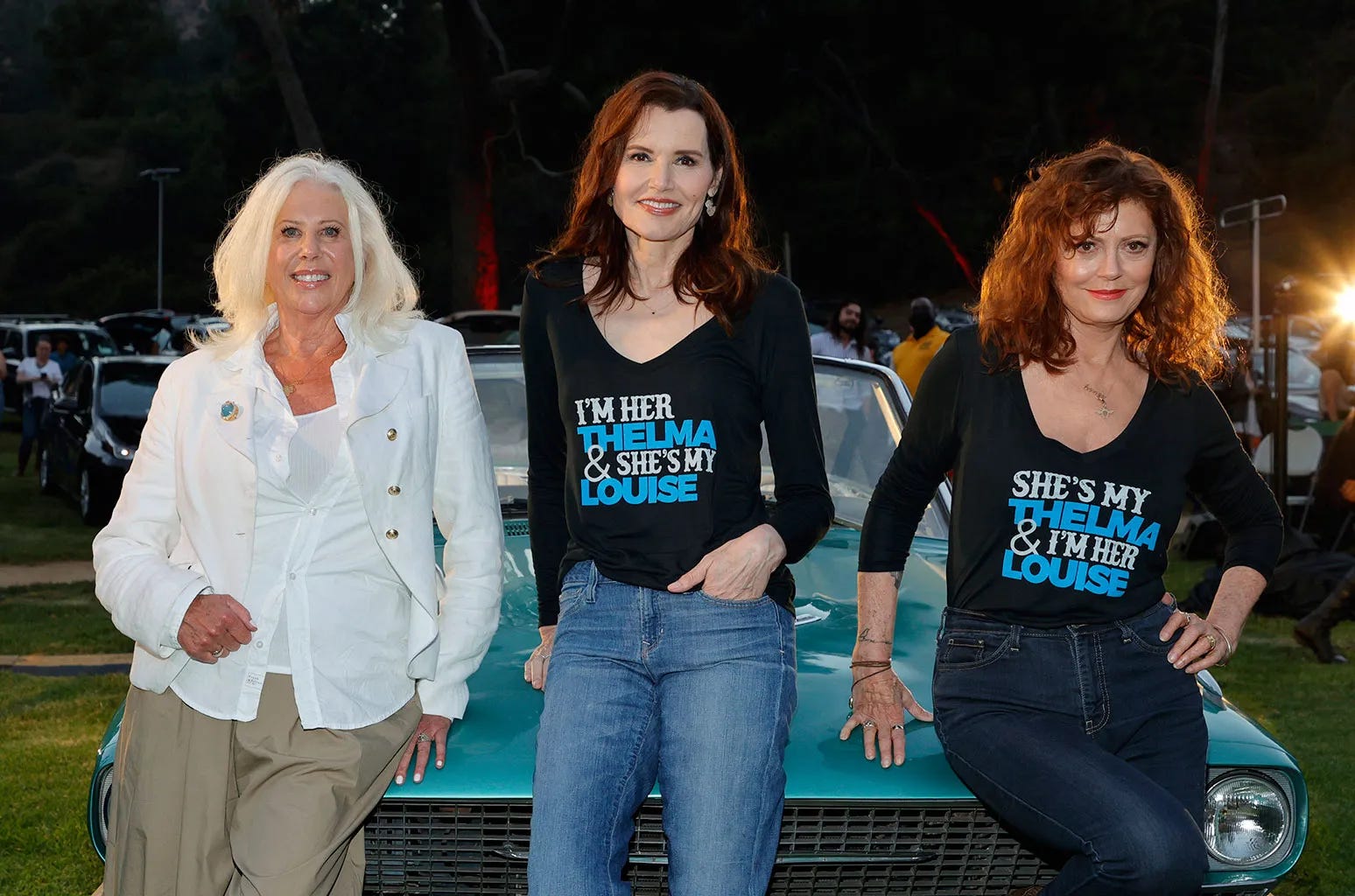
This gets us to the idea that even when a movie is about relatability and shared experiences, it is not simply about relatability and shared experiences. I’d want to talk about how experiences are communal but empathy is individualized, and how even though movies are made by people, they can never reach their full potential until they’re in the hands of a person with the background needed to fully understand the material. So much of that is intuitive to me, but let's not focus on that too much. After all, what fun would it be to point out that the one example you grabbed out of thin air to back up your argument was completely, unequivocally wrong?
Unfortunately, you kept on going. You had to make it all about Black Panther. Ryan Coogler, you claim, wasn’t “necessary” to direct the film. But if that’s your argument, what is the opposite of Coogler? If not him, then who? Who is the alternative you propose? You clearly seem to suggest that it should not be a Black director since it’s not — let me say that again — necessary. You are not interested in the fact that he brought a specific cultural knowledge to Black Panther that shaped everything from the Afrofuturist design language to the portrayal of Wakanda as a post-colonial African nation.
It’s the whiteness of Ridley Scott you’re after.
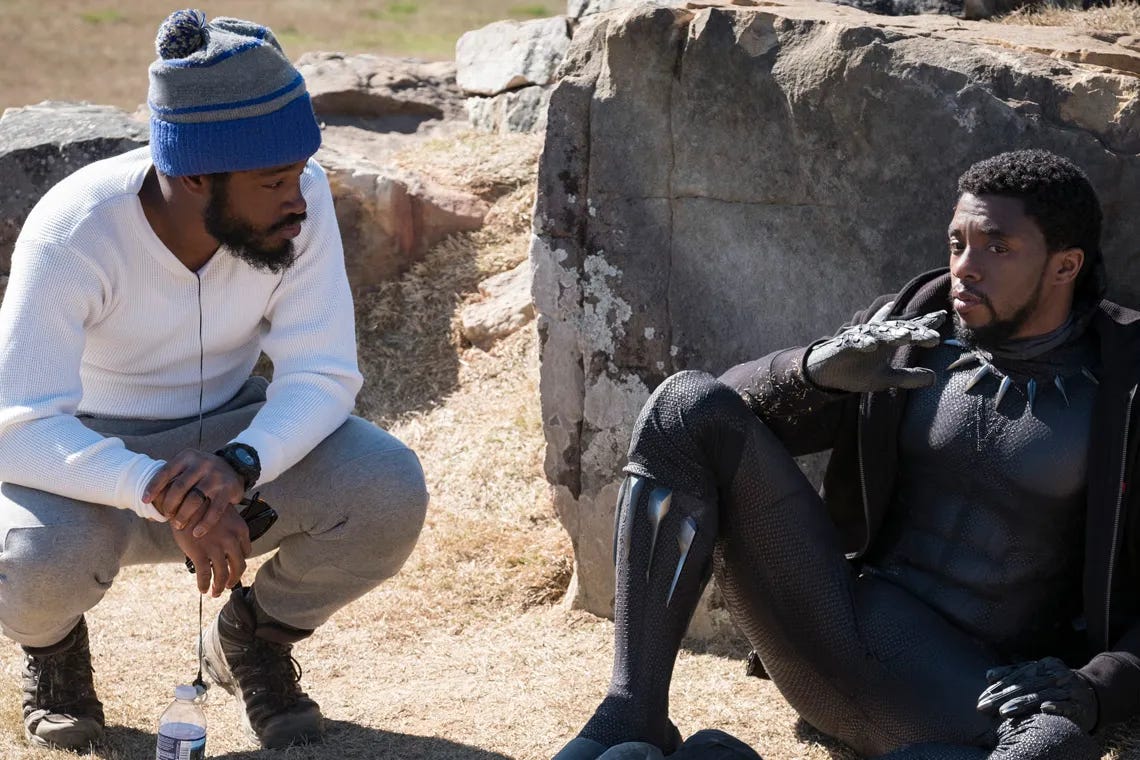
Shang-Chi's story came from Destin Daniel Cretton and David Callaham, built out of lived Asian-American experience in a way no one else could have supplied. There are plenty of filmmakers who are skilled and talented, but those movies encompassed unique cultural perspectives that could not have been achieved by giving a script about Asian-American generational trauma and culture to a white guy. That's the reason why those two films were so effective and resonant. A talented filmmaker can work outside of those experiences, and Pride & Prejudice still exists, but doing so risks losing the heart of a story.
Identity is so deeply intertwined with the art we make and the stories we tell, and to pretend that it doesn't matter in directing is to be wilfully ignorant and blind to the experiences of others who don’t look and sound like you.
At the end of the day, it wasn’t that Ridley Scott was the exception to the rule of needing women for women’s films — it was that he had a talented woman in his crew. It can be difficult for a keyboard warrior like you to understand, but movies about underrepresented and misrepresented people often need those underrepresented and misrepresented people behind the camera. Not because they can’t trust white men, but because they can’t trust that white men will understand the significance of their stories, even when they appear to “get it” on the page. They need that trust to make a good movie, and it shows.
I can’t speak for all women but I’m a firm believer in the idea that our narratives, our stories are “our people’s” first line of defense. For their sake, I hope people like you do not take that personally. If you haven’t already, those narratives will be stripped from us, as will our people, if we allow it. The male film bro’s refusal to allow women into their hallowed halls of cinema is absolutely the hill you’ll die on, and that’s perfectly alright with me. We are not needed, fine, and you are certainly not welcome in my space. If Wonder Woman, the greatest female superhero of all time, can be made into a mediocre franchise then so be it.
Sadly, the real-world thing that’s making those movies happen is the industry’s complete and utter inability to be honest about the systemic sexism, racism, and xenophobia that the film industry is built upon. It’s all PR, and it’s all bullshit, and it’s all smoke and mirrors. When you have power and privilege, you have the ability to deny people the things they’re owed — and then lie about it.
To wrap this up, your post is clearly lacking, but I think what frustrates me the most is that this is exactly the kind of post that I see on the internet online more and more every day — the "just asking questions" pseudo-intellectual who uses film discourse to avoid engaging with nuance and instead hide behind the facade that they're "fighting the good fight." It's all self aggrandising nonsense and it doesn't belong in film discourse. But more than that, it's dangerous. When people like you continue to pretend that you don't understand the insidious power dynamics at play, you create a space for yourself where you can completely ignore those power dynamics. It's a waste of everybody's time and energy, and that's exactly why this type of discourse has to be shut down. Goodbye.

Imagine what my brain looks like when it’s un-caffeinated. Now imagine it with more typos. Now imagine it in your inbox every week. Subscribe 🫶🏻
And if you love That Final Scene and want to support me as a full-time writer, go paid! Paid readers get the full monthly hotline, access to comment convos in my original investigations and the fuzzy feeling of supporting indie writing.
This is brilliant work. I could have levitated off the ground reading this part: the "just asking questions" pseudo-intellectual who uses film discourse to avoid engaging with nuance and instead hide behind the facade that they're "fighting the good fight."
This is such a good look at how people think the director experience affects the making of the movie