


17.9 million people watched the Oscars this year, which is a number that sounds impressive until you remember that MrBeast gets that on a single video about burying himself alive.
The audio mix was bad. They cut off the KPop Demon Hunters songwriters mid-speech. They made RDJ and Chris Evans cringe. Conan O'Brien — who I love, let me be clear, I have loved this man since the string dance — opened by telling the audience he was "the last human host" of the Academy Awards before doing a bit where he spoke in Gen Z slang over Subway Surfers footage. "Hostmaxxing the Oscars and lowkenuinely trying to rizz up the younger demographic by going brain-rot mode" is what the man said, out loud, on network television, in front of Jessie Buckley and God. Clavicular reacted live and declared network TV "a genuine fucking joke," which would be a career-ending own if Clavicular's entire livelihood didn't depend on reacting to network TV from his gaming chair. The ouroboros of it all.
The audience dropped 9% from last year’s post-pandemic high, the lowest since 2022 and the ceremony ran so long it nearly set a record for duration — a thing the Academy has been swearing for years it would fix. The 18-49 demo dropped 14%. Social impressions surged 42% to over 181 million, which means the Academy has frankly become a clip farm.
The Oscars are still culturally alive in the way a beheaded chicken with a great brand is physically alive — still running, still being stopped on the street, ultimately unclear about the direction.
Disney will keep it going like this for the next couple of years. ABC holds the broadcast through the 100th Oscars in 2028 — a centenary that will be commemorated, I assume, by a montage set to an Adele song and the vague institutional scent of a retirement party — and then YouTube takes over from 2029 to 2033, exclusive global rights, free to 2.7+ billion users worldwide.
The promise, as always, is access. Scale. Innovation. Closed captioning in multiple languages, year-round programming, the Governors Awards, the Nominees Luncheon, all of it on one channel. On streaming, the show will no longer be subject to FCC guidelines or broadcast TV formats. YouTube gives them carte blanche.
For the first time in a century, the Academy would have full production control without a network's notes.
And look, I am thrilled. For all I care, burn the run of show. Burn the walk-on music. Burn the bit where exhausted actors on the last leg of their press tours have to read scripted banter off a teleprompter. BURN IT ALL.
But liberation from constraint has never automatically meant liberation into vision, and that’s the part I would like us to start talking about. Every platform transition in the history of awards shows has resulted in the same ceremony1 with a different logo in the corner. YouTube COULD be the place where the Oscars finally become something new. Even so, it needs a rethinking so total it upends the format from what it currently is: a relic stuck in time and privilege, actively making the industry look impossible, distant and most importantly, uncool.
So why not give these two some inspo?
the new oscars season!
Let me be clear about where I stand: If I were queen of the Oscars, all campaigning would be outlawed2.
You know the part of a movie where the characters are in a really bad place and they’ve lost everything and everything is going wrong and they’re really in a “dark night of the soul” situation? And you the viewer are like, I’m sure the characters are doing a lot of growing and changing in this period, but to me it just looks like they’re wandering around in the desert and haven’t had a glass of water in two weeks and they look terrible?
And then eventually they’re dirty and disheveled and they’ve got a huge beard and they’ve lost a ton of weight and they look completely broken down and they come out the other side and you’re like, okay cool, that’s the part where you went through. You went through that. But I didn’t — I didn’t really go through it with you. That’s the Oscar campaigning season every year. The actors look hot, but the entire voting cycle is a relentless, thankless, spirit-crushing grind for everyone involved.
YouTube, while it’s full of horrible stuff, has an audience that actually doesn’t mind being talked to like it has a brain. YouTube, in the right hands, can actually be a place for something interesting to happen.
It’s time to finally have an awards event where everyone gets together to talk about what goes into shooting a movie.
I get that it’s always been somewhat difficult to explain to non-film buffs what a cinematographer is responsible for in any given scene. Sure, it seems fairly obvious to anyone with a modicum of common sense that the person behind the camera has a lot to do with how the scene looks, and that (obviously) the stuff in the background (or not) was lit and staged by someone else. But until you’ve seen the exact same scene lit, shot, and staged in different ways, it’s difficult to understand how crucial that work is to the scene’s overall tone.
So, in the month3 before the ceremony, I would have the Oscars channel on YouTube run events that actually show people what the technical categories are (and make it fun while doing so).
house tours with DPs
I want us to commission interior tour videos that Architectural Digest has hopefully agreed to produce for every Best Picture nominee. House tours are totally a cinematographer thing, right? I want the nominees to show us their style and framing or give a rundown of their favorite movies and how they inspired their work. We could do a pair DP showdown with Roger Deakins and Emmanuel Lubezki on the nature of sunlight, or a dramatic lighting challenge. Or the same room, made claustrophobic by one DP and infinite by another and warm by a third. Sontag wrote about the frame as argument, and this would be a great time to let general audiences see the argument happening in front of them, which, in my humble opinion, would change the way people watch films for the rest of their lives.
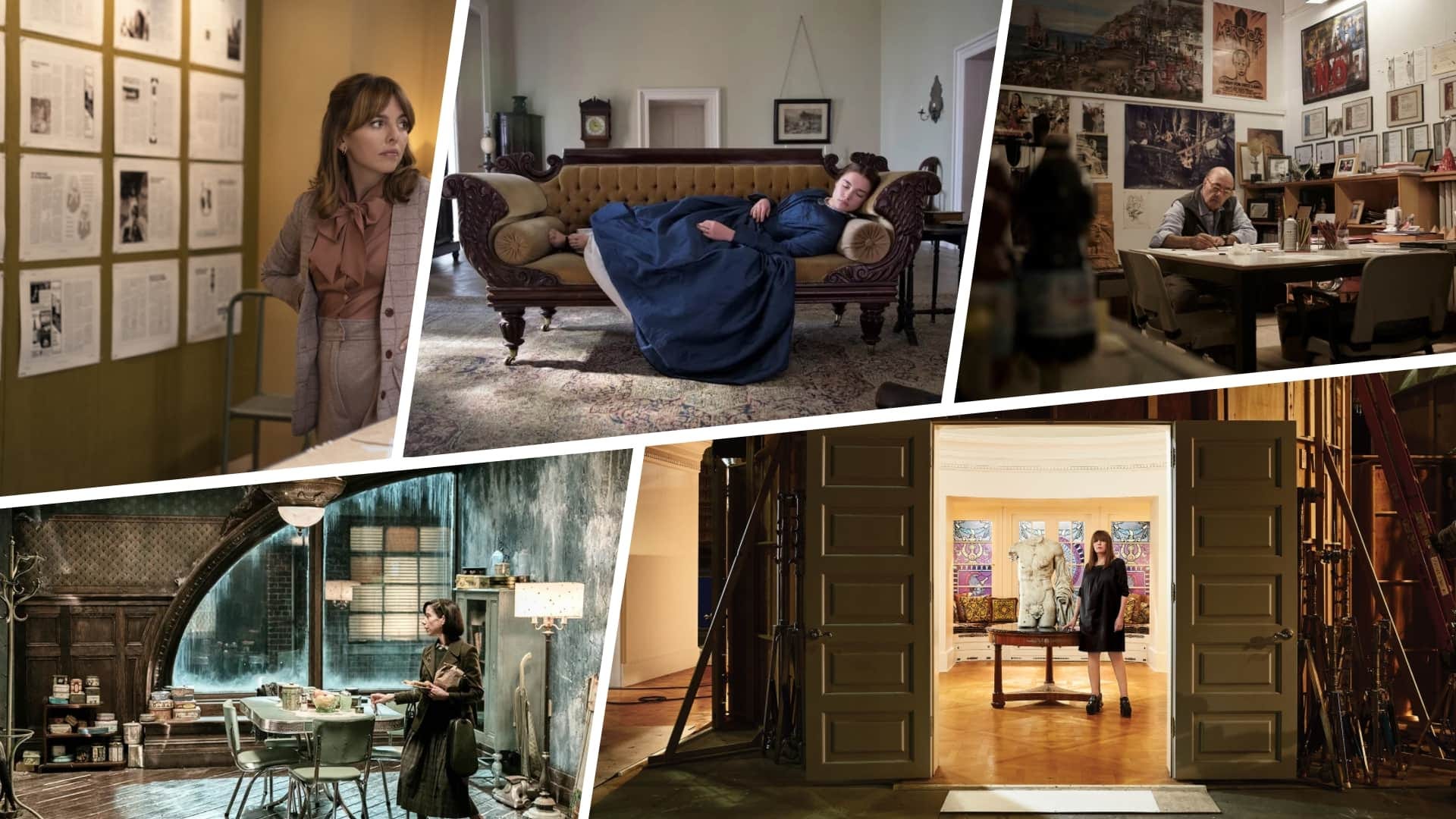
masterchef but with production designers
Do a production design challenge where the Academy gives all nominated production designers the same brief from a specific movie scene. They get four hours and a warehouse full of materials and cameras rolling the whole time, and you’d just watch them work. The idea of this is intoxicating to me. The actors from the nominated films perform the same scene in all spaces, and you’d be able to see how the room changes everything. The booth two feet to the left changes where the actor’s eye goes. The colour of the wall changes the weight of the same line of dialogue. It wouldn’t count toward the Oscar, but it would do something the ceremony has never managed in ninety-eight years of handing out the production design award: show people what production design actually is.
month-long marathons with makeup & hairstyling experts
Beauty & Fashion is one of YouTube’s most lucrative categories, and the one that earns the most views and clicks by a long shot. The platform has never had a more obvious opportunity to cross one of its most successful categories with the Academy Awards. After all, wouldn’t you rather watch a 10-minute makeup tutorial about how to do Victor Frankenstein-esque makeup than listen to some exhausted poor soul at the press junket about how she just loved the character so much?
So grab your makeup and hairstyling kits for a month of tutorials on the nominated actors’ looks, warm up those vocal cords for celebrity look-alike challenges, and get your bingo cards ready for actual award show games while you’re at it. Make the craft show up in a way that isn’t relegated to a red carpet interview. Show Oscar voters and the audience that makeup artistry is about more than just what you see on the surface. Yes, it’s an integral component of worldbuilding, of developing an actor’s performance, as critical to a character’s journey as the script or the direction or the score. But more importantly, it’s a highly-skilled craft that takes years of training.
a live fashion show with costumes from the films
A costume design runway where the nominated costumes would be on the actors who wore them. Seeing the costumes move — seeing the textures shift in the light, hearing the sound of the hem brushing against the floor, the rustle of the sleeve as the arm bends, seeing the patterns shift as the body breathes — you suddenly realize the extent of the craft that went into the garment. It goes beyond just the fabric and the design: the rhythm of the movement, the way the garment responds to the body, all of it is part of the costume designer’s work. Think ANTM without the toxicity, hunny!
explosions, really
SOUND DESIGN, PEOPLE. I could build a cathedral to sound design in my heart and never step outside again. In fact, if I had to spend a week in a room with anything or anyone, it would be just, like, a few hundred random sound designers, just hanging out. Sound designers are the people I’m most in awe of.
Unfortunately, they’re also the Oscar category everyone goes to the bathroom for. Not because they don’t care — because they have no idea what it actually is.
For my Oscars sound design event, I would have the nominees rig a theater with proper sound, like I’m not fucking around. Dolby Atmos sound, the whole shebang. I’m rolling in that sweet YouTube ad revenue.
I’d play the same three-minute scene from whichever movie everybody liked in a year four times: sound design only, dialogue only, score only, then everything together. The first time through, it would be an innocuous joke, a few lines of blather that maybe get a chuckle out of you if you’re in the right mood. The second time you hear it, just the dialogue…well, that’s what you’d expect in a movie, right? It’s technically funny, sure—if you’re in the right mood. The third time you hear the score only, well, obviously that’s funny too. Ever heard the song “Baba O’Riley” before the lyrics kicked in? It’s a banger. But it’s not until the fourth time, when everything comes together, that you start to understand what’s actually going on. It’s so repetitive, yet it’s the repetition that makes you finally realize something about film you’ve never understood before.
(You could see how I could do this all day for every craft-related category).
the new oscars weekend!
The weekend of the ceremony, I want every film nominated for Best Picture to drop on the YouTube homepage. Free, globally, subtitled in 40+ languages, available for 48 hours. This is the part where studios would need to be physically restrained from storming the building, but listen to me: If you want 2.7B+ people to care who wins Best Picture on Sunday night, let them watch the films on Friday night. Or Saturday. Hell, Sunday morning even.
And while we’re at it, let’s make them available with optional DVD commentary-style tracks4. Gen Z deserve to know how good we had it. What if Barry Jenkins, Jane Campion, and Greta Gerwig all got in a studio together and made something fun with their commentaries? This doesn’t even have to be limited to film workers. I want to hear a YouTube turtleneck essayist’s withering musings on The Secret Agent. I mean, what better way to spend a Saturday evening than listening to Cole Escola and Hunter Harris argue about how they fell asleep watching Hamnet? I want to see it all.
the new main event!
The way we know it, the main Oscars event is a levee holding back a rushing river, a singularity, a black hole where everyone else is sucking matter into their intense gravitational pull.
YouTube already has the solution, and the solution is what YouTube does by default: multiple simultaneous streams. You pick your Oscars experience.
You have a choice now. You have options.
the craft feed
Let’s just say that in my perfect world5, the Oscars on YouTube would have the Craft Feed designed specifically for me (and anybody else who can appreciate watching someone explain a ProTools session the way a sports commentator calls a tight game). Ayo Edebiri would be hosting it (obviously) with a panel of sound mixing, VFX, cinematography, and editing experts. When a craft-related Oscar winner is announced, you go to this Feed to actually get to hear about how that win happened. They’ll explain the nuts and bolts of the work as they show us the work itself.
This one is for the crafts in every sense.
the backstage feed
The backstage feed covers the red carpet, but it doesn’t really cover it so much as it eats it. I’m talking about Aubrey Plaza and Pedro Pascal locked in a room6 sitting down with popcorn live-reacting to red carpet looks. I’m talking about Jenna Ortega fumbling with a handkerchief as she approaches Nicolas Cage, tapping him on the shoulder to get his attention because he’s mid-anecdote to Tarantino and totally tuning him out.
I’m talking about the ubiquitous publicists who usually run the red carpet but are now lying face down on the ground because somebody recently unbuttoned their blazer and they are about to burst. I’m talking about Sofia Boutella searching for her voice because it went missing a few hours ago and all she’s got right now is the urge to say something really, really funny about revenge, but she’s just so thirsty. I’m talking about a team of twenty carpet wranglers trying to find an off-camera rest area for Alexander Skarsgard, who is wearing a Dior tuxedo and flip flops and who, if they don’t hurry, is about to run right through the backstage feed camera at the wrong moment.
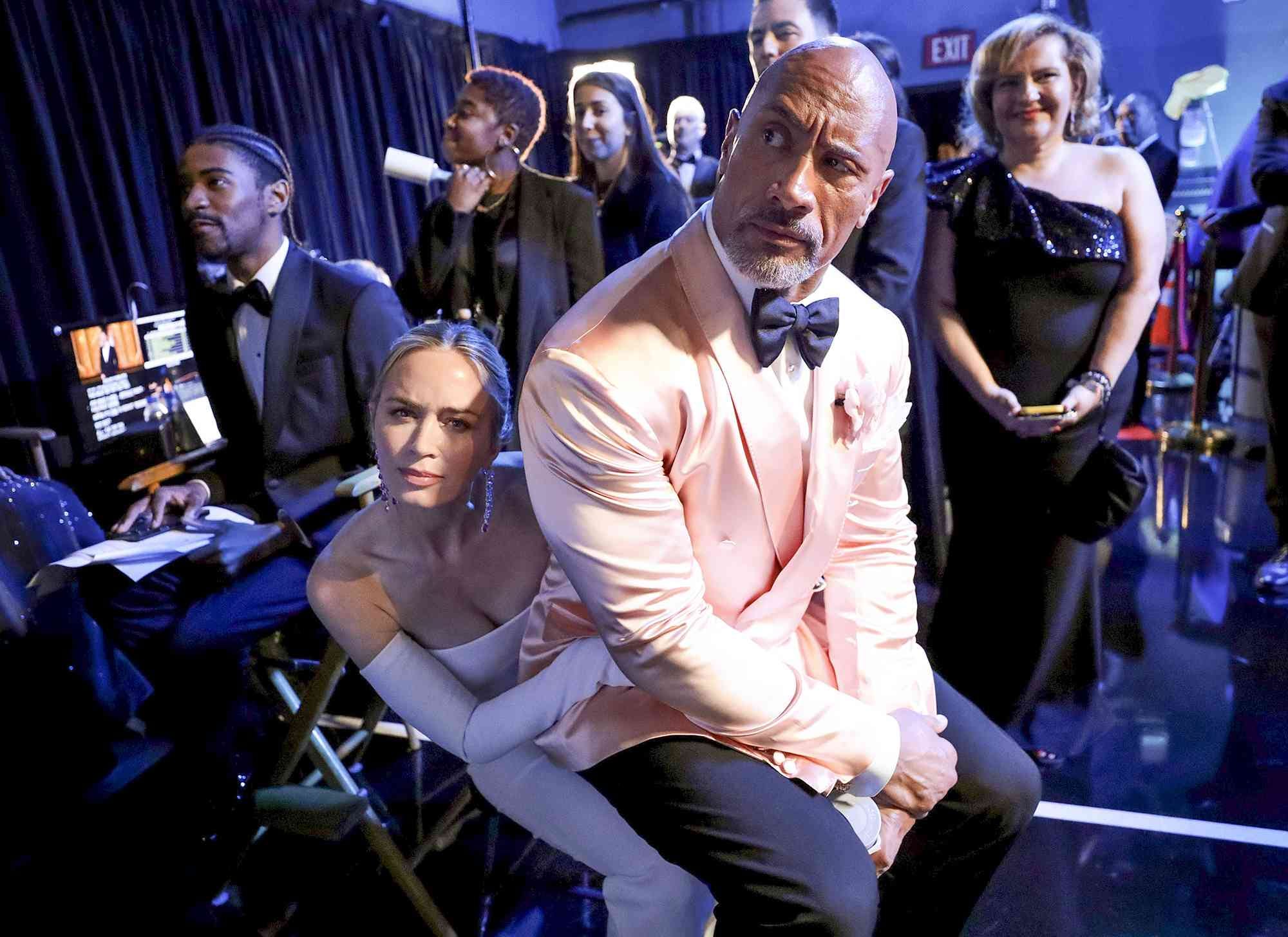
It’s chaos. It’s sticky. It’s a wonder that anybody makes it out without getting hit by a striking actor or a strike of their own. It’s a red carpet, of course, but it’s also the green room of the entire event. The backstage camera will follow you wherever, which means nobody is truly backstage. That zip-up hoodie you’re trying to stow in your pocket, that’s getting a close-up. That Cobb salad you’re picking at, we see you.
the taste feed
From all the discourse around taste in the past few months, I’ve come around to the idea that is this: taste is a learned discussion. Taste isn’t just about what you like. It’s about what you know, it’s about what you talk about, it’s about your experiences and the experiences of those around you. What you like and what your personal taste is stems from where you spend your time and who you spend it with. So, if taste is contextual, watching a feed like the Taste Feed could or would be educational. But it could also be a good time.
I envision the Taste Feed as a director’s commentary-esque feed of 4-5 folks known for their supreme taste riffing over the ceremony in a way that’s reminiscent of watching movies with your most well-connected friends who will tell you all the weird AND informed insights. On a base level, I would like to see a mix of cultural tastemakers such as the one and only Bowen Yang, a genuinely shocked and slightly frightened Josh Safdie, a totally unfazed Viv Chen, and whoever is behind the r/Oscarrace subreddit.
This Taste Feed does three things I haven’t seen elsewhere:
1) It breaks down the Oscar ceremony into something more tangible and real, because even people who love movies (like the ones in this feed) can find the Oscars arbitrary and weird.
2) It makes space for the words “I don’t know but let me show you how I think about this” in a real, tangible way, which creates a space where anyone can develop their own taste through trial and error.
3) It makes room for liking things for the sake of liking things, which is why we watch movies in the first place. It encourages people to pick up a Coen movie as a way to understand Hail Caesar because they’re curious, and curious people tend to have great taste.
the main feed (the live ceremony lives here)
There are stories that are meant to be told in a short form, and a night like the Oscars, where everyone is basically starved for filmmaking, is the perfect way to showcase that. What if the Oscars opened with a short film7 every year?
I think about what it would mean for a filmmaker who has never had that platform before. Or at least for an established filmmaker8 who has never been nominated. The opportunity to showcase your work in front of billions of people is unheard of. It would also set the scene in a way that the red carpet and the opening monologue (which, I actually think it’s time we admit, are completely dead) don’t because it would get us into an emotional space that the usual Oscars opening doesn’t touch.
(I get that we still need a host. But we need someone who can actually do something. Imo Anne Hathaway needs to be given another chance!)
The rest of the main feed/ceremony runs in three segments.
The first segment opens with a mix of emerging YouTube filmmakers and legendary Oscar-winning practitioners presenting the technical categories on the main stage. Someone like Patrick Willems9 does editing with a sixty-second visual breakdown. Jenny Nicholson does costume design. Mikey from the FilmJoy team could do screenplay. These people have enormous audiences that will watch the show probably just for them which is great news for the technical categories because we need to make people fall in love with the craft of filmmaking10 all over again!
To wrap up this segment, I’d do a live demo. I want it to be something that’s either visually stunning or purely spectacular in its technicality (it must have also been used in one of the nominated films). The trick is that it has to be cool enough that the audience at home wants to tune in to see it, and easy enough to understand that they can grasp the basics in sixty seconds. It’s got to wow them: Oh, right! Fuck yeah cinema!
The second segment is where the night breathes and gets strange. We’d have categories such as Supporting Actor/Actress, International Film, Animated Feature, and woven between them: the live ceremony moments. Specifically, I would have a handful of nominated performances — perhaps audience-voted — get re-staged live on the Oscar stage.
Picture Daniel Day-Lewis and Paul Dano doing the bowling alley scene from There Will Be Blood. This is acting, darling. This is the only truly Oscar-worthy action. (If Daniel Day-Lewis does not want to walk that stage, we need Paul Dano up there screaming “MY MILKSHAKE BRINGS ALL THE BOYS TO THE YARD” with reckless abandon while Daniel Day-Lewis stands there baffled.)
Or Cate Blanchett performing the iconic monologue from Tár with a live orchestra. The room is electric. She wears her signature short hair slicked back into a clean bun at the nape of her neck, ruby red lipstick stark against alabaster skin. She’s dressed in what appears to be a vintage tuxedo, with off-white lace sleeves falling delicately past shoulders bare and slight. She does wonders.
Cue the In Memoriam segment here. There are some real pitfalls with it at the moment. The most obvious is that people get left out, which is always going to happen just because of time and space constraints. But it can be particularly sensitive when someone very recent passes or if there’s a very shocking or surprising death. So what would I do differently? I’d want to make sure it was a fully collaborative project so that everyone felt represented and included while also being sensitive to any potential situations that could arise. I’d also like to know what they actually cared about? What they thought their best work was? I guess what I’m saying is I want a longer interview instead of a film industry obituary.
Now the last segment you’d have to save it for the top dogs: Best Director, Original and Adapted Screenplay, Leading actor and actress categories, and Best Picture. But before we move to announcements, we get the musical number. Yes, all we get is ONE and we all agree we hate when people sing during award shows (and the end of this performance should not be too long). Emma Stone and Ryan Gosling come out and do a number, strutting around backstage on their way to the stage (they’re there to present Best Picture, obviously).
The ceremony at this stage needs to make the audience feel like it’s been a long night, but not in a bad way—it’s pleasantly exhausting. It needs to be the bacon bagel sandwich after the morning rave. It needs to be paced like the last thirty minutes of No Country for Old Men: unhurried and inevitable.
Throughout the entire night, here’s what I’d blast across all feeds: Exclusive trailers11 every thirty minutes or so. The first one is totally unannounced and as soon as it drops, it becomes apparent it wasn’t unplanned — the screen cuts to black and the sound shifts in such a seamless way that everyone understands this was always part of the program. It doesn’t have a huge budget but it’s a film from somewhere in the world, and now you get excited for it because the trailer is the BOMB12.
(Plus, watching Kieran Culkin react to a thing he didn’t expect is always more interesting than watching someone react to a thing he expected.)
bonus: people’s category!
The Academy comes up with 10-15 additional categories13. One of them is chosen by us, the normies, and we change it every year. “Best stunt performance” could be the most interesting award to hand out in a year when a lot of stuff had great stunts, or maybe there weren’t that many interesting stunts and there were a lot of good monologues, so we vote on “Best Monologue” instead.
It very much is about putting that power back into that community’s hands and letting people vote on what they want to vote on.
i’ll wrap this up
Bob Hope called television a child bride at the 1953 ceremony, back when the Oscars’ relationship with the medium was new and uncomfortable and nobody could say how long it would last. Bauman wrote about liquid modernity — institutions that can no longer hold their shape because the conditions that created them have evaporated.
I’ve written multiple times about how, despite my best efforts, I can never escape the fascination I hold for the Oscars — a shiny object in a town built on shiny objects. Plenty of people are content to scoff at them from afar, though I’ll admit, it’s harder to ignore the bigger picture when you know people in the industry that would do anything, and I mean anything, for this stupid shiny object.
I know many people feel so detached from them that, at this point, for them to feel something, it would require a cataclysmic event. The ceremony has to be, on some level, awe-inspiring. If it’s going to be worth it at all — if all the endless boring awards shows and all the endless boring campaigns and all of miserable coverage is going to be worth sitting through — it has to be spectacle. It has to make you feel something. It needs to remind you of what an awards show can do when everyone involved believes in something: winning, losing, the power of movies. Everyone needs to want something so badly that night. And believe they might get it, too.
I’m not sure the Academy will use their newfound creative control to do anything interesting. The most ambitious stuff I laid out in this piece doesn’t sound all that radical to me. But I’m an optimist at heart. I have to be. I want to see more individual creators brought into this space, more major projects intersecting with smaller ones, and a platform that celebrates filmmaking instead of hindering it. I want to see Tom Cruise’s first Oscar livestreamed on YouTube in all its glory! The Academy has an incredible opportunity to rethink how any of this gets done, and I hope they take it.
But ultimately, this is YouTube’s game to lose. Kim Larson, global MD and head of creators at YouTube, said they are planning to give the Oscars “a little bit of a zhuzh-up”. A zhuzh-up can mean a lot of things. It can mean a full-on Wicked: Part Two situation, or it can mean just a little sprinkle here and there. I’m hoping for the latter.
YouTube can consider me their best consultant and talk to me anytime they want. We all really need to step up to the plate for this. All of our stupid little dreams are at stake here…and if we’re not careful, we might end up living theirs.

Why upgrade your TFS membership, you ask? Well, not only do you get to comment on my original investigations, but you also gain full access to the Reader Hotline AND start conversations in the TFS Chat.
Also, do you guys know about the A-lister membership? A-listers (aka founding members) get to request one custom film or TV essay from me each year. That’s right. You give me a film or TV show of your choosing and I write a few thousands words on it. Check it out 🫶🏻
In fact, if they use this freedom to recreate exactly the same ceremony but with a chat sidebar and a Super Thanks button, I will take it as a personal insult.
Oh baby, I am getting a little bonkers here. I am not moving to YouTube and exploiting my new platform like a sane person, I am getting weird. I am getting extreme, I am getting smug, I am giving every single person who has ever had any power over me in this industry a reason to never allow me to work in this city ever again.
Keep it tight, people!
All these years later, the commentary track still hasn’t found a home. After spending 30+ years learning about the human condition through the distracted conspiratorial chatter of Ron Howard, Michael Moore, and Sofia Coppola, I’m forced to watch our films in silence. This was an art form that just died when streaming killed physical media, and nobody mourned it properly. It didn’t even really have a burial. Just one day, we all started watching The Office on Peacock and never heard from it ever again. It still exists, of course. But where once it was an essential aspect of our cultural ecosystem, an ongoing anthropological study of legendary weirdos, it now sits like a golem waiting for someone to care enough to switch it back on.
You’d think a room full of the most talented, creative, and articulate people in Hollywood could make a case for celebrating the behind-the-scenes workers of the industry. But as the winners in the craft categories—sound mixing, editing, visual effects, production design, and more—trudge up to the mic, one at a time, for their 30-second acceptance speech, we find ourselves in a moment of palpable confusion.
My fanfic attempt: Aubrey Plaza and Pedro Pascal’s room, specifically designed for this Oscar ceremony special, is not much bigger than a walk-in closet. It’s dimly lit and has just enough space for a beat-up old green couch and a coffee table littered with snacks that were defrosted in the microwave without knowing their precise origin. The wall opposite the couch is completely covered in black velvet curtains. There are no pictures or windows, just black velvet curtains that are far too long and bunch up on the floor like sleeping snakes. And one of those curtains is the door through which they entered this room, and it has zero chance of being the exit either one of them chooses.
They walk in, and there are two recliners facing the TV, which is mounted on the wall like a painting, about eight feet off the ground. Aubrey goes to the couch first, drops down, and lies back. Pedro, who’s already smiling, drops down beside her and starts to recline too but fails. He goes to recline again, and this time, when he hits the couch, he puts his legs on the couch perpendicular to his body, his feet resting on the floor like he’s straddling two couches. She reaches over and slams the other recliner button, and the couch starts to recline Pedro downward. He grabs the armrest and turns onto his side, realizes he’s losing the battle against the couch, and drops onto his back, pushes himself upright into a seated position and waves his hands like he’s surrendering, but it’s not a surrender at all. You can see where I’m going with this.
Short films are often seen as the neglected stepchildren of the filmmaking world — love them, sure, but don’t talk about them around the dinner table. They have a few shiny trophies to their name, some festival laurels, and lots of heartfelt sentiment attached to them, but they’re not really part of the family. Most importantly, they don’t get any real love from the Academy.
Brenda Chapman. With an incredible decade of Pixar work under her belt, including Oscar-winning classics like Brave, Chapman has been criminally overlooked by the Academy. Plus, her work is perfect for showcasing animation in a short film category that could have a lot more representation. She’s a master of heart-tugging storytelling, and I think her short would be an absolute stunner.
Willems has spent so much time explaining this process, not only showing how it happens, but demonstrating how important it is to the final feel of a movie.
Incidentally this is also a skill that the Academy has been working on for ninety-eight years and has never once cracked.
Superhero films and sequels would absolutely not be allowed.
I mean, even if you’re not interested in watching a trailer, you’ll want to see what it is so you know whether to watch the next one.
Such as: “Best Performance by an Actor/Actress Who Wasn’t the Lead but Stole Every Scene They Were In” is a category for pick-me-ups after a few long months in an exhaustive awards season. Their win comes with a trophy case of clear, empty ceramic mugs and a few questionable fan encounters. While Supporting Actor nominations tend to go to beloved character actors who we’re just happy to see again, this award goes to the young up-and-comers who made us all feel something while they were on-screen. This award embraces weird performances, flawed performances, strange haircuts and all. It’s for taking more risks and reaping the rewards…and sometimes not reaping the rewards.
Plenty of cool ideas. Letting the best pictures screen for free that weekend is a must!
When you mentioned having the option of a DVD-like commentary track - I almost cried.