


I started 2020 with plans to see Portrait of a Lady on Fire at the Prince Charles Cinema with a friend who’d been hyping it for months. We had tickets for a Tuesday night. I remember because I’d taken the day off specifically for it. Then March happened and suddenly I was watching Céline Sciamma’s filmography alone in my flat in London, crying at Tomboy while the world outside my window went silent.
By winter I was back in Greece, staying with my parents for the first time since I was eighteen, rewatching The Sopranos on a loop because Tony’s therapy sessions felt more productive than my own mental spiral. My mother kept asking why I was watching “that violent show” and I kept explaining it was about family and she’d say “but we have family right here” and I’d retreat back to my laptop.
2021: A time in my life in London where I got really into watching films alone at the Barbican. Not because I’m particularly noble or intellectual, but because none of my friends wanted to see a three-hour Apichatpong Weerasethakul film on a Wednesday night and I was done pretending I didn’t.
2022 was the year I watched Everything Everywhere All At Once and genuinely couldn’t tell if it was brilliant or if we’d all were in desperate need of mental stimulation. A woman next to me was sobbing during the hot dog fingers scene and I thought: yes, we’re all coping normally.
2023: Oppenheimer in 70mm IMAX. The Trinity test detonated and a man behind me audibly gasped, then immediately checked his phone. The blue light from his screen illuminated the entire row.
2024 brought Challengers and the revelation that Luca Guadagnino understood threesomes better than most people in actual threesomes. I watched it twice in one week.
And now it’s the end of 2025. We’re staring down 2026 and it’s dawned on me about how we measure time now—not in years but in lockdowns, elections, strikes, and never-ending feeds that have convinced us we are more divided than we actually are.
Most best-of-the-decade lists won’t drop until December 2030, which is five years away and also feels deranged to conceptualize. Who’s to say we’ll make it that far? Who’s to say cinema will? Theatrical windows keep shrinking, streamers keep purging libraries for tax write-offs, and there’s a faint possibility AI will have replaced half the industry by then. The other half will be Tom Cruise doing his own stunts at age 73.
So here’s my pitch: Why wait? Why not take stock now, at the halfway point, while we (I?) can still remember how these films felt when they landed?
For the record, “essential” doesn’t mean important to everyone. And that’s okay, we can all still be friends! For me, it means:
I can’t imagine these five years without them
I remember where I was when I watched them
They’re tied to specific moments in my life that I can’t separate from the films themselves
I’m still thinking about them
So here’s Part I covering 2020-2022.
Part 2 will drop in the new year (for dramatic effect).
Note: If the release years look wrong to you, that’s because I live in the UK where films arrive six months late and we call it charming. Take it up with the distribution companies, not me.
2020
the father (Florian Zeller)
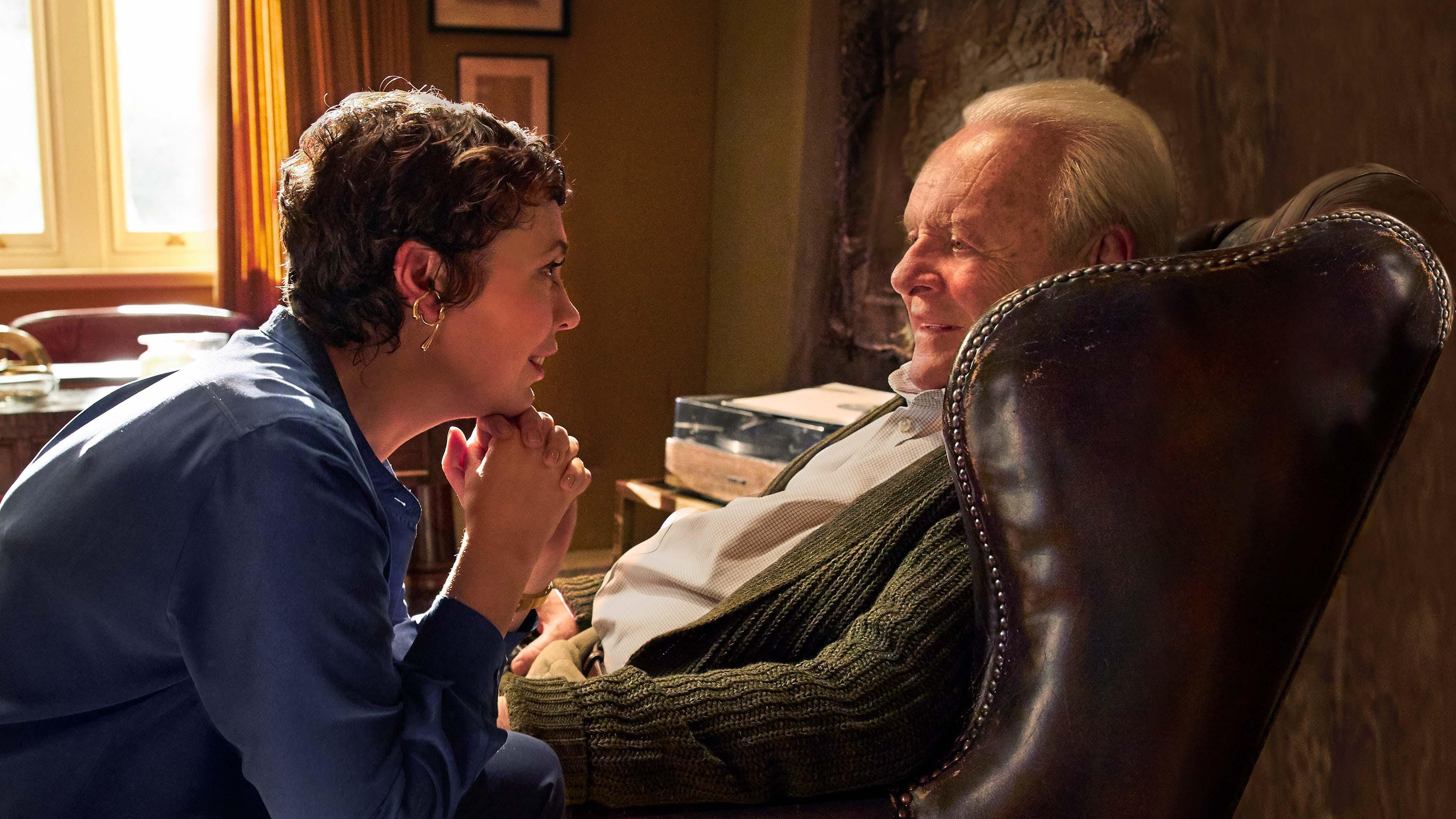
Most people would call The Father a fiiiiiine film. Competent. Anthony Hopkins doing Anthony Hopkins things, collect your BAFTA on the way out, see you never. I won’t argue with that read. The play-to-screen translation is workmanlike, the supporting cast doesn’t get much to do, and the whole thing was destined to appear on your dad’s “pretty good actually” list before sliding into permanent cultural irrelevance. But I can’t write about this one like a critic because my grandad spent his final three years asking for his brother, dead since 1990s, while failing to recognize the woman he’d been married to for fifty years. I sat across from him while he accused us of moving his chair, switching out the coffee cups, rearranging a kitchen that hadn’t changed since the colonels fell. I knew what dementia looked like from the outside. Zeller gave me the inside. That flat shifting between scenes isn’t a non-linear gimmick—it’s the detailed texture of a mind that can no longer trust space and time. Olivia Colman is his daughter until she isn’t because faces have stopped being reliable information. The disorienting edits are documentary realism if you’ve been on the other side of those eyes. I spent a long time wondering what my grandad was experiencing while I held his hand and lied that everything was normal.
I don’t wonder anymore.
portrait of a lady on fire (Céline Sciamma)
Portrait of a Lady on Fire landed in early 2020 like a dare with Céline Sciamma handing us a film constructed entirely from looking, from the accumulated weight of two women paying such ferocious attention to each other that the attention itself becomes the sex scene. She expected us to recognize it as erotic when most cinema still can’t conceptualize feminine desire without punishing it by the third act.
The film circulated like samizdat through group chats that April. “Have you seen it yet” was functioning as vibe check and litmus test simultaneously, with the timing not being incidental—we were all sitting alone in our flats, untouched and invisible, and Sciamma came out with a film arguing that visibility IS intimacy. Marianne paints Héloïse, Héloïse clocks Marianne clocking her, and within that loop of gazes you finally get a coherent theory of feminine want: female desire rendered not as spectacle or tragedy but as attention. Without a male mediator, without a camera that treats these women’s bodies as territory to be conquered or decoded, you get the radical proposition that two women falling in love might simply look like two people becoming visible to each other.
2020 was a period in time when presence became impossible, and I think that’s why it lodged itself so permanently in the cultural memory of everyone who encountered it during those months.
the long goodbye (Aneil Karia)
Riz Ahmed has been getting pulled out of airport lines since before he was famous—Schedule 7 detentions, humiliations of being asked “what kind of Muslim are you” by a border agent who’d watched Four Lions on the flight over—and the Oscar-winning The Long Goodbye, co-created with director Aneil Karia, metabolizes decades of that ambient surveillance into twelve minutes and forty-one seconds.
Karia opens on a multigenerational British-Pakistani household preparing for a wedding: handheld, available light, aunties commanding the stove, cousins mid-argument about dupattas, a father adjusting his son’s tie with the quiet pride of a man who will absolutely cry later and deny it. The domestic texture is so specific it borders on banal, which is the point. Then the frame stays the same but everything inside it shifts, mid-morning, and Karia keeps the camera shaky and intimate as the state enters the home with the bureaucratic calm of someone reading a gas meter.
This is the Britain of Prevent referrals on Muslim schoolchildren, of stop-and-search quotas in Tower Hamlets, of BBC journalists asking British Muslim actors to condemn attacks they learned about the same moment everyone else did—and Karia shoots the horror in the same handheld grammar as the wedding prep because they have always shared the same afternoon. The final three minutes are Ahmed alone, delivering spoken word directly to camera, and Karia holds on his face long enough that it stops feeling like a music video and starts feeling like testimony delivered to a court that will never convene.
It’s less than the length of your commute and it will restructure how you think about every prestige immigration drama that came before it.
his house (Remi Weekes)
Netflix usually churns out the type of film that you would, at your most generous, call mid so when something like His House appears, it feels like finding treasure in a landfill. Remi Weekes’ debut is a ghost story where the haunting is just what happens when you survive something unforgivable and then get told to be grateful for a moldy council flat in South London. Sope Dirisu and Wunmi Mosaku play Sudanese refugees who escape to England only to discover the UK asylum system operates like a slow-motion horror film: patronizing social workers, fluorescent waiting rooms, the constant performance of being a “good immigrant” while gangs circle and neighbors glare. The house they’re assigned is falling apart and possibly possessed, but Weekes shoots it so you can’t tell where the supernatural ends and the systemic cruelty begins. A night witch crawls from the walls. A child they couldn’t save on the boat over keeps appearing, waterlogged and accusing.
I love this film because it truly scared me while also making me furious, which almost never happens. Most films (regardless of their genre) about refugees treat the trauma as backstory, something to overcome through white saviors or found family or whatever. Weekes doesn’t give you that comfort. The house is haunted because Bol and Rial brought their dead with them, and no amount of assimilation will make those ghosts leave.
parasite (Bong Joon Ho)
Leaving Parasite off a 2020s list would get me excommunicated from Letterboxd and film criticism circles within the hour—this is the decade’s Bicycle Thieves, the film your professor’s professor will assign in 2055. So yes, obviously, it’s here. But over the last few years the discourse has flattened it into the precursor of the “eat the rich” genre renaissance when Bong’s actual achievement is nastier. He makes wanting money feel like a disease.
Saltburn shot the manor like an Architectural Digest spread and let Barry Keoghan’s feral little performance double as property lust; you walked out half-coveting the estate. Glass Onion staged its billionaire takedown on a Greek island so pristine the critique played like a Thomson holiday advert. Triangle of Sadness gave you forty minutes of yacht before the vomiting started. Bong gives you none of it. The Parks’ home is beautiful yet he films it like a crime scene photo—flat, evidentiary, cold. The camera lives in the Kims’ semi-basement, in the sewage gurgling up through their toilet, in the smell that saturates their clothes and hair and marks them the moment they walk into a room where wealth has settled. The Kims don’t want destruction. They want absorption. They want to be the family who winces at the man on the subway. That wanting—not the flood, not the knife—is what Bong dissects, and he offers no out.
2021
sound of metal (Darius Marder)
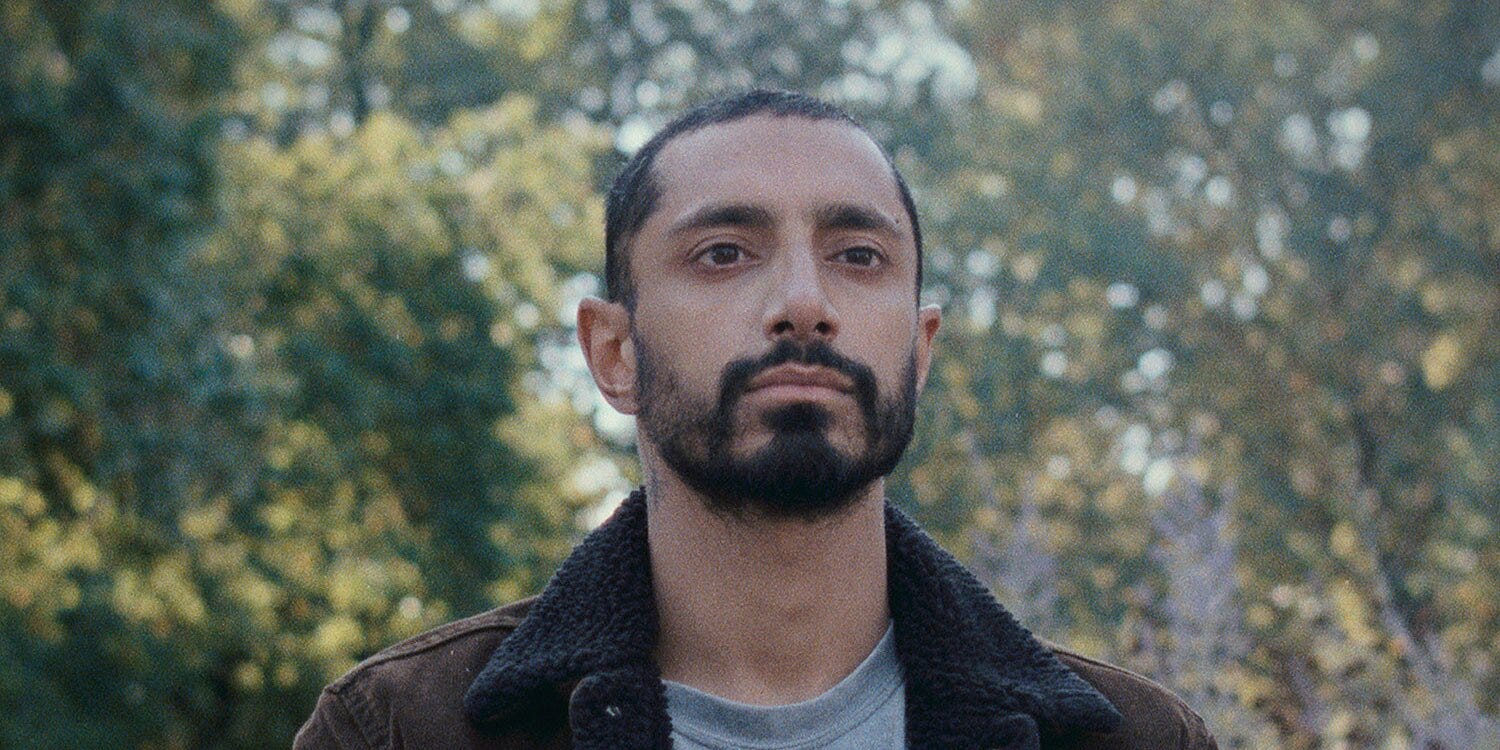
I watched Sound of Metal in my tiny Wandsworth bedroom during lockdown, lying on the floor with headphones on like I was 16 again. The final scene where Ruben sits in silence and you hear absolutely nothing—I paused it because I thought my laptop had broken. When I realized the silence was intentional, I sat still, frozen alongside him. Not because it was sad but because I couldn’t remember the last time a film trusted me enough to just sit in nothing.
My flatmate knocked on the door to ask if I wanted dinner and I couldn’t hear her knocking. I was that inside it. A film that can trick you into experiencing its subject’s reality instead of just watching it deserves to be called essential, even if that sounds like film school BS.
minari (Lee Isaac Chung)
Steven Yeun spends Minari with his jaw clenched so tight I wanted to reach through the screen and tell him to relax, except I know that face. It’s the one you make when you’ve bet everything on a decision everyone thinks is stupid. His character Jacob moves the family to Arkansas to grow Korean vegetables and his wife hates it, his kids are confused, and you spend the whole movie waiting for the film to pick a side: is he a dreamer or is he selfish? Chung never answers. The grandmother shows up and she’s not some wise vessel of immigrant knowledge, she’s just old and bored and loves professional wrestling. When she has a stroke and wanders outside at night trying to burn garbage and accidentally torches the barn Jacob built, the movie doesn’t frame it as tragedy or irony or metaphor. It’s just: this happened, now what.
The minari keeps growing by the creek because that’s what minari does—it’s a weed, it doesn’t care about your narrative arc. We’re all supposed to have one coherent story about our lives, some through-line that makes sense of why we moved or stayed or gave up or kept going. Minari suggests maybe that’s not true. Maybe your dream fails and your family adapts and a plant grows and none of it adds up to wisdom, it just adds up to: you lived, things happened, some stuff died and some stuff survived. The end.
the nest (Sean Durkin)
Sean Durkin makes movies about the misery that comes with wanting more than you have, which is maybe why I’m the only person I know who will defend The Nest with my life. Jude Law plays Rory, a finance guy who drags his American family to a crumbling English manor in the 1980s because he’s convinced he’s about to be rich, and the whole thing plays like watching someone’s marriage dissolve in real time through escalating dinner parties and bad architecture. Carrie Coon spends half the movie riding a horse alone because it’s the only place she doesn’t have to look at her husband’s face. Law does this thing where he’s always performing confidence even when he’s clearly drowning, and Durkin shoots it all with this cold, empty aesthetic—huge rooms, bad lighting, the kind of house that swallows you. Some people hated this movie. They said it was slow, nothing happens, why should we care about rich people’s problems.
But Durkin gets that it’s not about the money, it’s about the fact that Rory would rather die than admit he made a mistake. The dinner party where everything falls apart isn’t dramatic, it’s just uncomfortable and pathetic and real. By the end, the family’s still together but you can see the fissures, the tiny ways they’ve all decided to tolerate each other’s lies. Durkin’s films live in that space—the almost-breaking point that never quite breaks. I’m obsessed with his worlds.
another round (Thomas Vinterberg)
Another Round ends with Mads Mikkelsen erupting into dance on the Copenhagen docks and I sat flabbergasted on my seat because I'd forgotten bodies could do that—move with zero apology, take up space like it's owed to them. Many filmmakers would be tempted to turn this into inspirational soufflé, but no, this is Mikkelsen deploying his actual ballet training to spin and leap and cartwheel with such ferocity it borders on aggression. Vinterberg holds the shot, lets it run, no cutting away to spare us the rawness of watching a middle-aged man lose himself completely in front of his students. The film doesn't tell you if Martin's transcendent or spiraling or both. He just moves, uncontained, and the movie ends mid-jump. He's airborne, suspended, never lands. I watched this after months of shrinking my masked self in public spaces, walking into Tesco with my shoulders hunched like I was apologizing for existing, and Mikkelsen's dance felt obscene in its lack of self-consciousness. He's not performing for anyone. He's not even aware of being watched.
The film captures what it looks like when someone briefly escapes the stone cold version of themselves and becomes animal again. Another Round belongs in my list because it visualizes the central crisis of 2020-2025: we survived the pandemic, but survival petrified us, and now we've forgotten how to be reckless enough to feel anything.
petite maman (Céline Sciamma)
Grief doesn’t arrive with violins and tears in Céline Sciamma’s hands—it shows up in the way a child folds a crepe or builds a fort in the woods behind her dead grandmother’s house. Petite Maman runs 72 minutes and I’ve watched it several times when it came out because it excavates more about mother-daughter relationships than every therapy session I’ve paid for combined. Nelly meets a girl in the forest who turns out to be her own mother at age eight, and they build a life-sized house out of branches and bedsheets while time collapses like origami. The film operates on fairy tale logic except the witch is grief and the spell is understanding your mother existed before you ruined her body and derailed her ambitions, and I cannot think about that without my throat closing.
Josephine and Gabrielle Sanz play both generations with this feral sweetness that makes me ache for every version of my mother I’ll never meet: the girl who wanted to be a dancer, the teenager who fell in love badly, the woman who became a parent before she became herself. Sciamma made something that rewires how I see the woman who made me without needing to spell anything out, and I keep returning to it like a bruise I can’t stop pressing.
bonus: c’mon c’mon (Mike Mills)
I’m not close with my uncle and never have been, which makes it strange that C’mon C’mon hit me like a freight train. Joaquin Phoenix plays Johnny, a radio journalist who agrees to watch his nine-year-old nephew Jesse for a few weeks while his sister handles her ex-husband’s spiral, and the whole film is just Phoenix fumbling through bedtime routines and fielding impossible questions like “what does the future look like” from a kid who can smell bullshit from three blocks away. They road trip across America (New Orleans, Detroit, New York) and Mike Mills shoots it in black and white that makes everything look both timeless and heartbreaking, lingering on several beautiful moments: Jesse methodically eating cereal, Johnny bombing a bedtime story, the two of them navigating each other without instructions.
The film came out in 2021 when half my friends were getting married and the other half were having crises about whether they wanted to get married in the first place, and I fell squarely in the crisis camp. Watching Johnny try to care for this kid while clearly having no clue what he’s doing made me realize something I’d been avoiding, which is that family has nothing to do with knowing what you’re doing. It’s about showing up anyway. It’s about answering the hard questions even when you don’t have answers. Mills directed a film so gentle it almost feels slight until you realize it’s dismantled you completely.
2022
the worst person in the world (Joachim Trier)
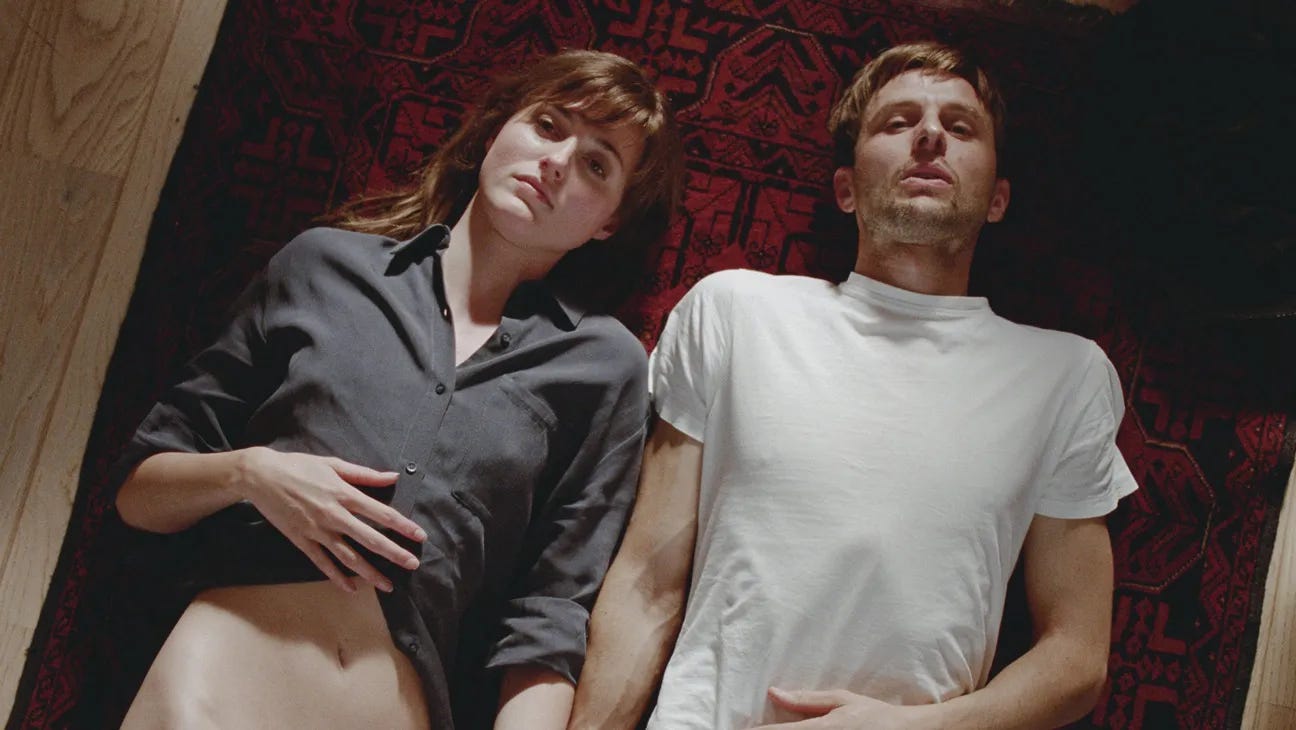
I was 29 when I watched Julie leave her boyfriend mid-dinner party—just walks out while he’s mid-sentence about his graphic novels—and recognized the woman I’d been conditioned to believe didn’t deserve screen time: selfish, directionless, incapable of gratitude for the Good Man she’s supposedly ruining. This was my last year single, spent fielding questions about when I’d finally settle down with someone who had his life together, as if my own uncertainty was a disease requiring a cure named commitment. Julie ricochets between medical school and photography and maybe writing while dating Aksel, whose entire existence is already authored—published work, intellectual soirées, future as finished product—and she can’t articulate why it makes her want to implode her own life. Renate Reinsve plays her like Gena Rowlands in A Woman Under the Influence except nobody’s trying to institutionalize her, just quietly suggesting she’s ungrateful, difficult, the worst person in the world for not wanting what she’s supposed to want.
Trier’s film, ultimately, is about a woman at 29 who hurts people and changes her mind and leaves good situations because they feel wrong, and rather than punishing her with consequences or character growth, he just follows her. Watching her claim that space made my own flailing feel less like pathology and more like the non-linear, legitimate work of becoming.
parallel mothers (Pedro Almodóvar)
Pedro Almodóvar wrote a story about two women who give birth on the same day and somehow smuggled an entire reckoning with Spain’s fascist past into a maternity ward melodrama, which is the kind of tonal high-wire act only he could pull off without it collapsing into pretension. Parallel Mothers opens with Penélope Cruz asking a forensic anthropologist to excavate her great-grandfather’s mass grave and ends with her nursing a baby that isn’t genetically hers, and between those points Almodóvar weaves together motherhood and memory and national amnesia with such ferocious elegance I wanted to applaud the sheer audacity of it. He shoots Madrid like a jewel box—all vermillion walls and azure tiles and women in clothes so saturated with color they could stop traffic—while the film’s skeleton is pure thriller: swapped babies, DNA tests, secrets metastasizing in living rooms. Cruz plays Janis with this molten intensity, a photographer who carries her family’s unburied dead alongside her own maternal guilt, and watching her navigate both feels like witnessing someone balance on a knife’s edge in stilettos.
Almodóvar has always known that personal catastrophe and political tragedy aren’t separate registers but the same frequency played at different volumes, and Parallel Mothers synthesizes his entire career—the lush aesthetics, the furious politics, the melodrama that never once winks at itself—into something that feels both quintessentially his and completely urgent for this decade. This is how you make a film that’s gorgeous and gutting and politically uncompromising all at once, and I cannot think of another director alive who could engineer it this beautifully.
flee (Jonas Poher Rasmussen)
Amin spent twenty years in Denmark pretending he arrived there legally, and Jonas Poher Rasmussen made Flee so Amin could finally tell the truth about fleeing Afghanistan as a kid, about the traffickers in Moscow and the shipping container and all the years of lying to everyone he loved about where he came from. Except Amin can’t show his face without putting his family in danger, so Rasmussen animated the whole thing. Rotoscoped interviews, hand-drawn memories, the visual style shifting every time Amin’s pulling up a different part of his past.
The film lets Amin be genuinely difficult about his own trauma, which almost never happens in refugee narratives. He’s stressed about his boyfriend wanting to buy a house together, not because of his undocumented status but because commitment terrifies him in ways he can’t articulate. He’s kept massive secrets from people who think they know him. He’s not performing gratitude or resilience, he’s just trying to figure out how to stop running when running is the only thing that’s kept him alive since he was twelve. Europe spent 2021 building higher fences and electing people who campaign on cruelty toward refugees, so watching this film (which won every documentary award that year) felt, and feels, essential in ways it most definitely deserved. Animation does something here that I’m not sure live footage could manage: Details blur. Timelines collapse. Certain images stay frozen while everything around them disappears. Rasmussen’s documentary looks nothing like what we think documentaries should look like, and it works better because of it.
hit the road (Panah Panahi)
I picked Hit The Road for this list because Panahi figured out how to make a film about state violence without showing any violence at all. My grandma used to force us to stop every forty minutes on those Greek summer drives—six people crammed in a Peugeot that smelled like cigarettes and overripe peaches, everyone at each other’s throats. Road movies are supposed to be about freedom, right? Open highway, wind in your hair, all that Thelma & Louise bullshit. Well, Panahi flips it. His family is trapped even though they’re moving, the car becomes a cell, and the kid bouncing off the walls isn’t cute—he’s short-circuiting because he’s six and doesn’t understand why his brother keeps staring out the window like he’s already dead. There’s a wedding they crash. Four minutes of borrowed happiness. Then back to driving toward an ending everybody knows is coming. The beauty of the film is that Panahi never explains what’s happening. He just films a family saying goodbye in the only way authoritarianism allows: quietly, in a car, pretending it’s temporary. That’s 2022 in 93 minutes.
aftersun (Charlotte Wells)
Aftersun is the film I wish didn’t exist because then I wouldn’t have to explain to people why I started therapy again at 29. To this date I still don’t know how Charlotte Wells directed something so vicious feel so tender. Calum takes his daughter to Turkey and the entire movie is him trying to be a good father while something inside him is already gone—you can see it in how carefully he speaks, how he flinches when Sophie hugs him too suddenly, like affection is something he’s borrowing and needs to return intact. His daughter Sophie watches him the way I used to watch my own father during silences that stretched too long, that child’s panic of knowing something’s wrong but being told you’re imagining it. I grew up in a house where I learned to read atmospheric pressure, where silence meant something bad was coming and I just had to figure out what I’d done wrong.
Wells shoots this vacation like evidence being compiled—here’s your dad struggling with his back brace, here’s the moment he tells you about being young, here’s when you realize he’s saying goodbye without using the word. The film ended and I sat through the credits sobbing because I finally had language for a feeling I’d been carrying since childhood: sometimes people leave not because you failed them, but because their sadness is so much more encompassing than your love.
bonus: argentina 1985 (Santiago Mitre)
I caught Argentina 1985 at the London Film Festival purely because I had a couple of hours to kill before my next screening, and Santiago Mitre’s courtroom procedural about prosecuting the military junta became the film I couldn’t stop recommending to strangers on the festival circuit afterward. Look, I know “based on true events” triggers our collective eye-roll reflex—we’ve been trained to expect treacly manipulation and Oscar-baiting speeches—BUT Mitre films bureaucracy like a thriller. Ricardo Darín’s prosecutor Julio Strassera isn’t some crusading hero; he’s a middle-aged man who chain-smokes through his terror, who knows the entire apparatus of power wants him to fail, and who builds his case the way you’d defuse a bomb. Watching this in a dark cinema in 2022 while the UK government was collapsing weekly and accountability felt like a fairy tale, was how the film treats justice not as inevitable but as constructed. Painstakingly. Witness by witness. The courtroom turns into an engine of memory, and Mitre films testimony with such restraint that when the camera finally holds on a survivor’s face, the accumulated weight nearly splits you open.
I watched it again when it dropped on Prime because I needed to confirm I hadn’t hallucinated its delivery. I can confirm I hadn’t! It’s a spectacular film about how democracies repair themselves when they’re brave enough to look backward, and I’m begging you to watch it before we forget that’s even possible.
✨ You can find Part 2 HERE ✨
Now what are your essential films from the 2020s so far?

Want to be featured on That Final Scene and get a free 3-month membership?
I’m always on the hunt for your confessions as part of my Reader Hotline.
You share your most revealing, weird, or controversial takes on films and TV.
I respond and my readers chime in. Think of it as therapy, but I’m not licensed and your thoughts might end up on the internet.
Here’s what I’m looking for:
Plot armor: The show or film that got you through a difficult time.
Spicy take: Your most controversial film opinion that you’ll defend with your life.
Reality check: The film or show that completely rewired your worldview.
Triggered: When something on screen or in the theater hit you unexpectedly hard.
Send your confessions to sophie@thatfinalscene.com or record your voice message on the link below. Everyone who submits gets the free membership, whether I use your story or not. See you in the confessional.
Brilliant list and great idea as well! I see many people just doing their favourite films of the year, but as your list has proven, we’ve been spoilt over the past few years.
Two of my favourites have got to be Sound of Metal and Aftersun though, both of which made me sit with my mouth wide open whilst the credits rolled and then subsequently turned me into a sobbing mess the days after, which I have realised is my way of saying yep, that’s a great film.
Anyhow, great picks!
Take care,
Mo
Fantastic list. I was stunned on so many levels by C'mon C'mon. I've revisited it more than any other film released 2020-2025. There are just so many little beautiful aspects to it.